
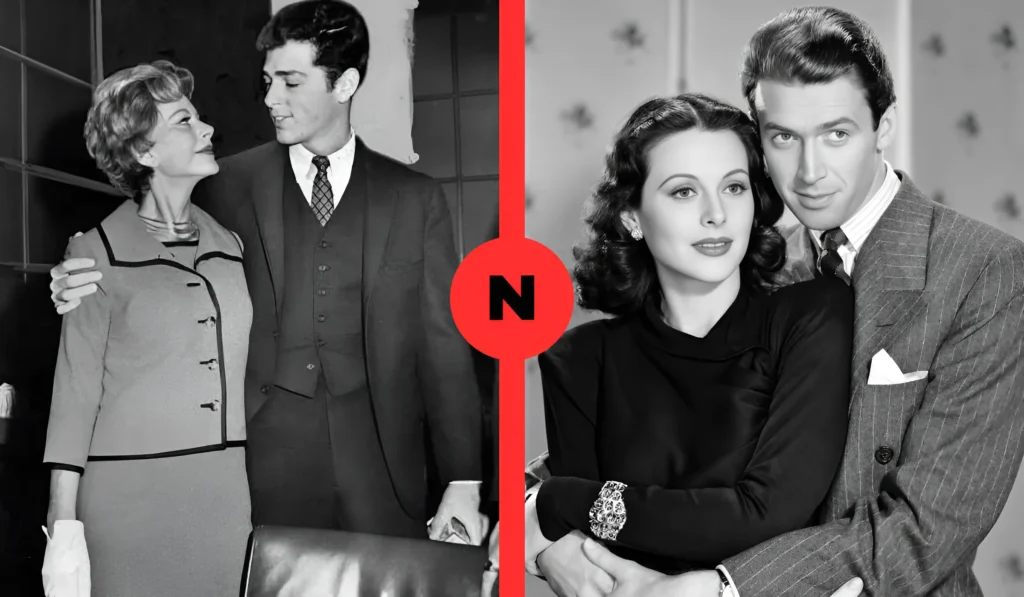
James Lamarr Markey, also known as James Lamarr Loder, was the adopted son of Hollywood actress and inventor Hedy Lamarr. Born in 1939, he became part of the actress’s family during her marriage to screenwriter and producer Gene Markey. He later adopted the Loder surname following Hedy’s marriage to British actor John Loder. Although his
James Lamarr Markey, also known as James Lamarr Loder, was the adopted son of Hollywood actress and inventor Hedy Lamarr. Born in 1939, he became part of the actress’s family during her marriage to screenwriter and producer Gene Markey. He later adopted the Loder surname following Hedy’s marriage to British actor John Loder.
Although his name is associated with one of Hollywood’s most celebrated actresses, James followed a very different path from his famous mother. His adult life included military service, employment with the Omaha Police Department, and involvement in a 1969 shooting that became an important event in Nebraska’s civil rights history.
His relationship with Hedy Lamarr was also complicated. Accounts describe a long estrangement, disputed claims concerning his biological parentage, and a legal disagreement involving her estate after her death in 2000.
These events make James Lamarr Markey’s life more complex than a conventional celebrity-family biography.
Understanding his story requires separating established historical records from later interpretations, particularly concerning his adoption, family relationships, and personal circumstances.
Who Was James Lamarr Markey?
James Lamarr Markey was an American man best known for his connection to Hedy Lamarr, the Austrian-born Hollywood actress who also contributed to the development of frequency-hopping communication technology.
His name appears in historical biographies, family records, newspaper archives, and accounts of events in Omaha, Nebraska.
He was originally known as James Lamarr Markey because of his legal association with Gene Markey, the Hollywood screenwriter and producer who married Hedy Lamarr in 1939.
After Hedy married actor John Loder in 1943, James was also adopted by Loder and became known as James Lamarr Loder.
This explains why historical sources sometimes use different surnames when referring to the same person.
James did not establish a significant public career in the entertainment industry. Instead, the available record connects him with military and law enforcement service.
His historical importance comes from both his Hollywood family background and his involvement in a deeply consequential event in Omaha.
James Lamarr Markey: Quick Biography
| Detail | Information |
|---|---|
| Full name | James Lamarr Markey |
| Also known as | James Lamarr Loder |
| Reported birth date | January 9, 1939 |
| Reported birthplace | Los Angeles, California |
| Adoptive mother | Hedy Lamarr |
| Adoptive father | Gene Markey |
| Later adoptive father | John Loder |
| Family connections | Denise Loder and Anthony Loder |
| Military service | Reportedly served in the US Air Force |
| Known employment | Omaha police officer |
| Significant historical event | 1969 fatal shooting of Vivian Strong |
| Later public record | Dispute concerning Hedy Lamarr’s estate |
| Reported death | Around July 2013; exact details not independently established |
Several of these details are documented through historical accounts, while exact birth and death information relies on biographical or genealogical records that do not always provide complete supporting documentation.
James Lamarr Markey’s Early Life
James Lamarr Markey’s early life began during a period when Hollywood studios exercised substantial influence over the public images of their stars.
Hedy Lamarr was establishing herself as a major actress in the American film industry, while Gene Markey worked as a screenwriter and producer.
The couple married in 1939.
During their marriage, James entered the family through adoption.
Some genealogical references report January 9, 1939, as his date of birth, with Los Angeles identified as his birthplace.
However, surviving publicly accessible records do not provide a completely consistent account of his biological origins.
His Adoption by Hedy Lamarr and Gene Markey
Hedy Lamarr and Gene Markey became James’s adoptive parents during their marriage.
Historical biographies generally identify James as Lamarr’s adopted son.
The couple’s relationship ended in 1941, but James remained part of Hedy’s family history.
The adoption is important because it establishes a documented legal family relationship, regardless of later disputes concerning biological parentage.
In discussions of adoption, it is useful to distinguish the legal relationship between parent and child from questions of genetics.
An adopted child remains a family member even when biological ancestry is different.
Why Was He Named James Lamarr Markey?
His name reflected the family into which he had been adopted.
The surname Markey came from Gene Markey, while Lamarr connected him with Hedy Lamarr.
Later records identify him as James Lamarr Loder.
The change occurred after Hedy’s marriage to actor John Loder, who also adopted James.
This change in surname is one reason online biographies sometimes appear inconsistent.
James Markey and James Loder are not necessarily references to two separate individuals in this historical context.
Who Was Hedy Lamarr?
Hedy Lamarr was born Hedwig Eva Maria Kiesler on November 9, 1914, in Vienna, Austria.
She became internationally recognized for her screen performances during Hollywood’s Golden Age.
Her films included Algiers (1938), Boom Town (1940), and Samson and Delilah (1949).
Beyond acting, she developed an interest in inventions and technical problems.
During World War II, she worked with composer George Antheil on a frequency-hopping communication system intended to reduce interference with radio-controlled torpedoes.
Their patented work later became an important historical example in the development of secure wireless communication.
Hedy Lamarr’s reputation today therefore extends beyond her film career.
She is remembered as both an actress and an inventor whose technical interests received greater recognition later in her life.
James was part of her family during this remarkable period.
However, being raised within the household of a famous actress did not necessarily mean that he shared her professional ambitions.
Gene Markey and the Family Connection
Gene Markey was a Hollywood screenwriter and producer.
He married Hedy Lamarr in 1939, making him part of James’s early family history.
The couple divorced in 1941.
Gene’s association with James helps explain the surname Markey, which appears in early family references.
However, some later biographies place greater emphasis on John Loder because James eventually used the Loder name.
Both relationships matter when reconstructing his identity.
A biography that mentions only John Loder may leave readers confused about the Markey surname.
Similarly, an article that discusses only Gene Markey may fail to explain why later records identify James as James Loder.
John Loder and James’s Name Change
John Loder was a British actor who appeared in numerous films and television productions.
He married Hedy Lamarr in 1943.
Their marriage continued until 1947.
During their relationship, Loder adopted James, who subsequently became known as James Lamarr Loder.
Hedy and John Loder also had two children together: Denise and Anthony.
These family connections are relevant because they later became part of discussions surrounding James’s parentage and Hedy Lamarr’s estate.
Who Were James Lamarr Markey’s Siblings?
Denise Loder and Anthony Loder were the children of Hedy Lamarr and John Loder.
They were James’s siblings within the family.
Because James’s adoption and biological ancestry later became disputed subjects, different publications describe the relationships using different terminology.
Some use adopted siblings, while others discuss claims of biological relationships.
The most reliable approach is to preserve the documented family structure without treating every later biological claim as established.
James Lamarr Markey’s Relationship With Hedy Lamarr
The relationship between James and Hedy Lamarr became strained during his childhood.
Several biographical accounts describe a separation that occurred when James was approximately twelve years old.
Later accounts suggest that they remained estranged for much of Hedy’s life.
However, the precise circumstances of their separation are not consistently established.
Some publications attribute the breakdown to family disagreements, schooling arrangements, or conflicts involving James’s behavior.
Those explanations should not be treated as definitive without reliable supporting evidence.
Family relationships are rarely understood fully through newspaper summaries or retrospective biographical accounts.
The established fact is that the relationship became distant and later remained a subject of public discussion.
Did Hedy Lamarr Disown James?
Some historical accounts describe James as having been excluded from Hedy Lamarr’s later estate arrangements.
Others use emotionally charged terms such as abandonment or disownment.
While those descriptions appear in published sources, they can oversimplify a complicated family relationship.
The more precise historical record concerns their estrangement and the legal dispute that followed Hedy’s death.
Those events provide stronger evidence than attempts to reconstruct the private emotions of either individual.
James Lamarr Markey’s Military Service
Historical accounts identify James Lamarr Loder as having served in the United States Air Force.
North Omaha historical reporting states that he spent approximately eight years in military service before becoming an Omaha police officer.
The available sources do not establish a complete official military service record.
His exact assignments, ranks, deployment locations, and decorations therefore should not be stated as confirmed facts.
Military service represents an important distinction between James’s life and the entertainment careers of his adoptive parents.
Rather than working primarily in film or television, he pursued a professional path involving public service institutions.
After leaving the military, he joined the Omaha Police Department.
That decision led to the most consequential and publicly documented episode of his adult life.
James Lamarr Loder and the Omaha Police Department
James Loder worked as a police officer in Omaha, Nebraska, during the late 1960s.
His name appears in contemporary newspaper reports and historical collections concerning a fatal police shooting in June 1969.
The incident involved Vivian Strong, a fourteen-year-old African American girl.
Her death became a major event in North Omaha’s history and contributed to days of protests and unrest.
This aspect of James’s life is significant enough that it cannot responsibly be omitted from a biography.
However, its importance lies not only in his personal history but also in the life of Vivian Strong, the circumstances of her death, and the wider community response.
The 1969 Death of Vivian Strong
On June 24, 1969, fourteen-year-old Vivian Strong was shot and killed by Omaha police officer James Loder.
Historical accounts describe officers responding to activity at the Logan Fontenelle housing projects.
Vivian and other young people were present at the location.
When police arrived, some of the young people attempted to leave.
Loder fired his weapon, fatally striking Vivian.
The killing generated widespread public anger in North Omaha.
Residents and civil rights advocates questioned the circumstances surrounding the shooting and the treatment of the Black community by local authorities.
Why Did the Incident Become So Significant?
Vivian Strong’s death occurred during a period of intense debate over policing, discrimination, and civil rights in American cities.
The late 1960s saw numerous confrontations between law enforcement agencies and communities demanding accountability.
In Omaha, Vivian’s killing became a focal point for existing grievances.
Demonstrations and unrest followed.
Historical reporting describes property damage, fires, and confrontations during the days after her death.
However, understanding the event solely as a period of unrest would overlook its central cause: the fatal shooting of a fourteen-year-old girl.
Vivian Strong’s life and the impact of her death on her family and community remain essential to the historical account.
Was James Loder Charged With a Crime?
Following Vivian Strong’s death, James Loder faced a manslaughter charge.
The case proceeded through the legal system.
On March 17, 1970, a jury acquitted him.
An acquittal means that the prosecution did not obtain a criminal conviction under the applicable legal standard.
It does not erase the fact that Vivian Strong was killed or eliminate the historical questions raised by the shooting.
The verdict was part of a broader public controversy surrounding police accountability in Omaha.
Historical accounts also report that Loder later returned to police duties.
His subsequent employment with the department ended in 1971 following disciplinary proceedings involving rule violations.
Why Is This Event Important to His Biography?
Some recent articles about James Lamarr Markey concentrate almost entirely on his famous family and make little reference to Omaha.
That approach produces an incomplete account.
His involvement in Vivian Strong’s death is independently documented through historical reporting and archival material.
It is therefore an essential part of his publicly recorded adult life.
A balanced biography must acknowledge the incident without reducing Vivian Strong to a minor detail in someone else’s story.
The Debate About James’s Biological Parents
One of the most disputed parts of James Lamarr Markey’s biography concerns his biological parentage.
Hedy Lamarr maintained that James was adopted.
However, later reports described allegations that he might have been her biological son.
Some accounts also suggested that John Loder could have been his biological father.
These claims attracted particular attention after Hedy’s death.
A February 2001 report in the New York Post discussed an investigation challenging the earlier adoption account.
However, subsequent accounts of documentary research and reported DNA testing challenged the biological relationship claims.
What Did Later DNA Reporting Suggest?
Accounts associated with the documentary Bombshell: The Hedy Lamarr Story state that later DNA testing did not establish James as biologically related to Hedy Lamarr or John Loder.
The underlying laboratory report was not independently reviewed for this article.
Therefore, it is more accurate to describe this as a reported DNA finding rather than present an independently examined genetic record.
The distinction is important because biological parentage is a factual question that can be affected by the quality of available evidence.
The legal adoption relationship, by contrast, remains part of the established family history.
What Happened After Hedy Lamarr Died?
Hedy Lamarr died on January 19, 2000, in Florida.
Her death brought renewed attention to her family relationships and estate.
James Loder became involved in a dispute concerning her will.
An October 2000 United Press International report documented the disagreement between James and other family members.
The dispute concerned his exclusion from the estate arrangements and questions raised about the will.
Some later summaries report that the matter eventually ended in a financial settlement.
However, the publicly accessible contemporary reporting reviewed here does not establish every subsequent legal detail.
Why Did the Estate Dispute Attract Attention?
The dispute combined several subjects already associated with Hedy Lamarr’s biography.
These included her six marriages, complicated family relationships, and James’s contested biological identity.
The inheritance proceedings also renewed interest in his childhood and the long period of estrangement.
However, the financial dispute should not be treated as proof of any particular biological relationship.
Inheritance claims, legal parentage, and genetic ancestry are separate questions.
They require different forms of evidence.
James Lamarr Markey’s Later Life
After his law enforcement career, James appears to have lived a comparatively less public life.
A North Omaha historical account identifies him as working as a security guard at a riverboat casino in Council Bluffs, Iowa, around 2001.
This provides a documented indication of later employment.
However, detailed records of his professional activities, family relationships, and residence during the following years are limited.
There is also insufficient reliable information to reconstruct his personal routines or relationships.
A lack of public interviews does not necessarily indicate that he deliberately avoided attention.
It may simply reflect the fact that he was not a major entertainment personality.
When Did James Lamarr Markey Die?
Several recent biographical websites report that James Lamarr Markey died around July 2013.
However, the exact date and circumstances have not been independently established through a sufficiently reliable obituary or primary death record in the sources reviewed.
For that reason, the reported death should be treated cautiously.
His commonly reported birth date is January 9, 1939.
If the 2013 death information is accurate, he would have been approximately seventy-four years old.
A precise age at death should not be presented without confirming the underlying record.
Did James Lamarr Markey Have a Wife or Children?
Reliable public information about James’s own marital history and children remains limited.
His family relationships with Hedy Lamarr, Gene Markey, John Loder, Denise Loder, and Anthony Loder are well represented in historical material.
However, that does not establish his complete adult family history.
Some recent online biographies offer descriptions of his private relationships without providing independently verifiable documentation.
A reliable biography should not invent a spouse, children, or other family details to fill those gaps.
James Lamarr Markey’s Net Worth
No credible, independently documented net-worth figure has been established for James Lamarr Markey.
His former employment and family connection to a Hollywood celebrity are not sufficient to calculate his assets.
Public information about earnings, property, debts, and private financial arrangements is incomplete.
The inheritance dispute involving Hedy Lamarr also does not establish the full value of James’s personal estate.
Any precise net-worth estimate without supporting financial records would be speculative.
Why Is James Lamarr Markey Still Remembered?
James Lamarr Markey remains a subject of historical interest for two very different reasons.
The first is his connection to Hedy Lamarr.
Her acting career and work on frequency-hopping technology continue to attract attention, prompting readers to investigate her marriages, children, and personal history.
The second is his involvement in the 1969 shooting of Vivian Strong.
That event is part of Omaha’s civil rights and policing history, independent of the Hollywood connections of the officer involved.
These two histories should not be treated as equivalent forms of celebrity recognition.
One concerns family biography. The other involves the death of a child and the broader demand for accountability.
Both are necessary to understand why James’s name appears in historical sources.
Frequently Asked Questions
Who was James Lamarr Markey?
James Lamarr Markey, later known as James Lamarr Loder, was the adopted son of actress and inventor Hedy Lamarr. He later served in the military and worked as an Omaha police officer.
Was James Lamarr Markey Hedy Lamarr’s biological son?
Hedy Lamarr maintained that James was adopted. Later reports disputed his parentage, but accounts of subsequent DNA testing challenged claims of a biological connection.
Why did James change his surname to Loder?
Actor John Loder adopted James after marrying Hedy Lamarr. Historical records subsequently identify him as James Lamarr Loder.
When was James Lamarr Markey born?
Genealogical and biographical sources commonly give January 9, 1939, as his birth date.
Was James Lamarr Markey a police officer?
Yes. Historical records identify him as an Omaha police officer during the late 1960s.
What happened in Omaha in 1969?
James Loder fatally shot fourteen-year-old Vivian Strong in June 1969. He was charged with manslaughter and acquitted in March 1970. The death contributed to major protests and unrest in North Omaha.
Did James challenge Hedy Lamarr’s will?
Yes. Contemporary reporting documents a dispute involving James and Hedy Lamarr’s estate after her death in 2000.
Did James Lamarr Markey work in Hollywood?
There is no well-established evidence that he pursued a major professional career in the entertainment industry.
When did James Lamarr Markey die?
Several secondary sources report a death around July 2013, but the precise date has not been independently verified through a primary record.
Final Thoughts
James Lamarr Markey’s life intersected with two distinct chapters of American history.
Through his adoption by Hedy Lamarr and Gene Markey, he became part of a well-known Hollywood family. His later surname connected him to actor John Loder, while disputed parentage claims and an inheritance disagreement complicated the public understanding of his background.
His adult history also included military service and police employment in Omaha, where the 1969 killing of Vivian Strong became a major event in the city’s civil rights history.
A complete biography cannot focus exclusively on celebrity relationships while overlooking this documented incident.
Although details concerning his birth, private family life, and death remain uncertain, the surviving historical record establishes a more substantial account than the limited descriptions found in many celebrity profiles.
His story illustrates the importance of considering both family history and independently documented public events when examining a life connected to a famous name.
You may also read: Joan Alt: The Private Life of Dick York’s Wife and Her Family Story


















Leave a Comment
Your email address will not be published. Required fields are marked with *