
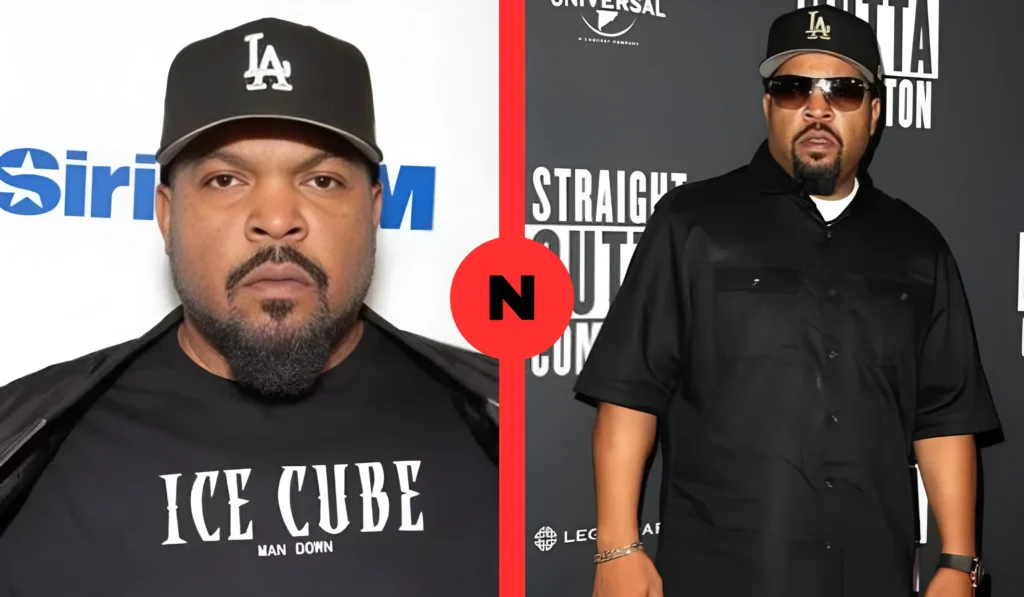
Ice Cube is one of the most influential figures in American hip-hop, but his financial achievements extend far beyond his career as a rapper. As of October 2026, Ice Cube’s net worth is commonly estimated at approximately $160 million, reflecting decades of work in music, film, television production, commercial partnerships, and entrepreneurship. Some financial estimates
Ice Cube is one of the most influential figures in American hip-hop, but his financial achievements extend far beyond his career as a rapper. As of October 2026, Ice Cube’s net worth is commonly estimated at approximately $160 million, reflecting decades of work in music, film, television production, commercial partnerships, and entrepreneurship. Some financial estimates place his wealth higher, but his complete personal assets, liabilities, and private business ownership interests are not publicly disclosed. The frequently reported $160 million figure should therefore be understood as an estimate rather than a confirmed personal financial statement.
Born O’Shea Jackson on June 15, 1969, in Los Angeles, California, Ice Cube first achieved widespread recognition as a member of the influential hip-hop group N.W.A. His songwriting helped establish the group as a defining force in West Coast rap during the late 1980s. After leaving N.W.A., he developed a successful solo music career before moving into acting, screenwriting, film production, and business ownership. These different professional activities allowed him to build a financial foundation that was not dependent exclusively on music sales or live performances.
Ice Cube’s wealth is particularly interesting because his career demonstrates the financial difference between earning money as a performer and participating in the ownership of businesses and creative projects. A musician may receive compensation for recording albums or performing concerts, while a producer or business owner may participate in the commercial performance of an entire project. Ice Cube has pursued opportunities in both areas, gradually expanding his involvement in entertainment and sports.
His business interests became especially significant through Cube Vision, his production company, and BIG3, the professional three-on-three basketball league he co-founded. In 2026, the basketball organization announced a proposed public-market transaction involving a reported enterprise valuation of approximately $290 million. However, that figure represents the proposed valuation of the business transaction and should not be confused with Ice Cube’s personal net worth.
Understanding how Ice Cube became wealthy requires examining his early music career, Hollywood success, creative ownership, business investments, and the limitations surrounding celebrity wealth estimates.
What Is Ice Cube’s Net Worth in 2026?
Ice Cube’s net worth is estimated at approximately $160 million as of October 2026. This figure is widely used in celebrity financial profiles and reflects the accumulated value attributed to his entertainment career, investments, and business interests.
However, different financial assessments produce different results. Some place his estimated fortune closer to $200 million, largely because private holdings such as his interests in BIG3 and entertainment production are difficult to value precisely. The difference between these estimates reflects uncertainty rather than evidence that his personal wealth increased or decreased by a specific amount.
Net worth is calculated by subtracting liabilities from the estimated value of assets. For an entertainer with multiple private investments, determining this figure involves more than adding publicly reported salaries and movie earnings. Music rights, production agreements, company ownership interests, real estate, investment portfolios, outstanding obligations, and taxes may all influence the final amount.
Ice Cube has not publicly released a comprehensive audited personal financial statement establishing the value of every asset he owns. Consequently, no outside estimate can be treated as perfectly accurate.
The more reliable conclusion is that Ice Cube has accumulated substantial nine-figure wealth through a diversified entertainment and business career. His financial success developed over several decades rather than through one album, movie, or investment.
Who Is Ice Cube?
Ice Cube is an American rapper, songwriter, actor, film producer, screenwriter, and entrepreneur who became famous during the rise of West Coast hip-hop in the late 1980s.
He was born O’Shea Jackson on June 15, 1969, in Los Angeles, California. As of October 2026, he is 57 years old. He grew up in South Central Los Angeles, an environment that influenced the social observations and storytelling found in his early music.
His mother, Doris Jackson, worked in hospital-related employment, while his father, Hosea Jackson, worked as a groundskeeper. Ice Cube developed an interest in music during his teenage years and began writing rap lyrics before achieving commercial recognition.
He became closely associated with N.W.A., a group whose music helped bring West Coast hip-hop into mainstream cultural discussions. The group’s confrontational lyrics addressed policing, community conditions, and social tensions, often generating controversy while attracting significant attention.
After leaving the group in 1989, Ice Cube established an independent musical identity and released several influential albums. His subsequent move into film gave him another avenue for creative expression and commercial success.
Over the following decades, he became associated with major entertainment franchises and eventually established himself as a business figure through media production and professional basketball.
Ice Cube’s Early Life and Musical Beginnings
Ice Cube grew up in Los Angeles during a period when hip-hop was developing into an increasingly significant cultural movement. His early surroundings and experiences helped shape his interest in writing music that reflected social realities, personal observations, and life in urban communities.
As a teenager, he developed his lyrical abilities and began working with other young musicians. His interest in rap eventually brought him into contact with individuals who would become central figures in the development of West Coast hip-hop.
Before N.W.A. achieved widespread recognition, Ice Cube participated in the group C.I.A., an early stage of his recording career. His involvement in these activities provided experience with songwriting, recording, and collaboration.
He also attended the Phoenix Institute of Technology in Arizona, where he studied architectural drafting. Although his professional future ultimately developed within entertainment, this period forms part of his educational background.
By the late 1980s, Ice Cube was contributing lyrics to N.W.A., whose music would become central to a major transformation in American hip-hop.
These early experiences were important to his later financial success because they established his abilities as a writer and performer before he entered other commercial fields. However, the financial rewards associated with his initial music career were different from the substantial business interests he developed later.
How N.W.A. Helped Launch Ice Cube’s Career
N.W.A. played a central role in Ice Cube’s rise to prominence. The group’s members included Eazy-E, Dr. Dre, MC Ren, DJ Yella, and Ice Cube, each contributing to its musical identity and public recognition.
The 1988 album Straight Outta Compton became a defining release in hip-hop history. Its aggressive sound and politically charged lyrics brought attention to social conditions in Los Angeles and established the group as a major cultural force.
Ice Cube contributed significant songwriting to the project, helping develop the lyrical perspective that distinguished N.W.A. from many contemporary acts.
Although the group’s success increased his recognition, his time with N.W.A. also involved disagreements concerning financial arrangements. Ice Cube departed in 1989 amid disputes over compensation and contractual matters.
This experience became an important turning point. Rather than continuing within the same group structure, he pursued an independent recording career and gained greater control over his musical direction.
The financial details of his original N.W.A. agreements are not fully available in a form that would allow a reliable calculation of his exact earnings from that period.
Nevertheless, the group’s success provided a powerful foundation for his reputation. The recognition he gained through songwriting helped create opportunities for solo recordings, film projects, and later commercial ventures.
Ice Cube’s Successful Solo Music Career
Following his departure from N.W.A., Ice Cube released AmeriKKKa’s Most Wanted in 1990. The album established him as a major solo artist and demonstrated that his musical success did not depend entirely on his former group.
His next album, Death Certificate, arrived in 1991 and continued exploring social and political themes through direct, often controversial lyrics.
In 1992, he released The Predator, which became one of the most commercially successful projects of his early solo career. The album included songs that attracted substantial attention and contributed to his position as a leading figure in American rap.
Ice Cube continued releasing music throughout the following decades, maintaining his association with hip-hop while expanding his professional activities into other industries.
His later work included Everythang’s Corrupt in 2018, Man Down in 2024, and Man Up in 2025.
These releases demonstrate that music remained part of his professional identity even after he became heavily involved in filmmaking and business.
His solo career generated income through album sales, recording agreements, live performances, licensing arrangements, and other music-related activities. However, the precise amount he has retained from each category is not publicly established.
Music also helped create his broader commercial identity. His reputation as a rapper contributed to the audience recognition that supported later acting opportunities and business partnerships.
How Much Money Has Ice Cube Made From Music?
Ice Cube has earned money from music for several decades, but there is no complete publicly verified breakdown of his lifetime music income.
Recording artists can receive compensation through various arrangements, including royalties, publishing rights, licensing, physical sales, digital distribution, and live performances. However, the amount reaching an individual artist depends on contractual terms, ownership percentages, expenses, and other obligations.
A song generating substantial revenue does not necessarily mean its performer receives the entire amount. Songwriters, music publishers, record labels, producers, and other rights holders may participate in the revenue depending on the relevant agreements.
Ice Cube’s involvement in songwriting is particularly important because publishing rights can provide a source of income separate from performance-related compensation. However, the precise present-day ownership structure of his music catalog is not comprehensively disclosed.
His music has also maintained cultural relevance over time, creating opportunities for licensing and continued audience interest.
It would be misleading to assign a specific portion of his $160 million estimated net worth to music royalties without reliable documentation.
The most accurate assessment is that music provided the foundation of his career and remains one component of a larger financial portfolio that includes film production and business ownership.
Ice Cube’s Transition Into Hollywood
Ice Cube’s move into acting significantly expanded his career opportunities. He made his feature-film acting debut in John Singleton’s Boyz n the Hood, released in 1991.
The film addressed the lives of young people growing up in South Central Los Angeles and became an important work in American cinema. Ice Cube’s performance as Doughboy introduced him to film audiences and demonstrated his ability to portray a dramatic character outside his established musical identity.
His early acting success was important because it opened opportunities that did not depend on continued album releases.
Throughout the 1990s, he appeared in additional films and began exploring screenwriting and production. These activities gradually expanded his role from performer to creative participant in the development of entertainment projects.
The shift became especially significant with Friday, the 1995 comedy that Ice Cube co-wrote with DJ Pooh.
The film’s success helped establish Ice Cube as a creative figure capable of developing commercially appealing stories rather than simply appearing in projects created by others.
Hollywood subsequently became a major component of his professional life, offering opportunities to earn from acting, writing, production, and involvement in entertainment franchises.
How the Friday Movies Contributed to Ice Cube’s Wealth
The Friday franchise is one of the most recognizable parts of Ice Cube’s film career. The original movie, released in 1995, starred Ice Cube alongside Chris Tucker and focused on the experiences of two friends spending a day in their Los Angeles neighborhood.
The film became a popular comedy and developed a lasting cultural presence through memorable characters, dialogue, and everyday humor.
Ice Cube played an important role in its creative development as both a writer and actor. His involvement continued with Next Friday in 2000 and Friday After Next in 2002.
The franchise expanded his reputation as a filmmaker and demonstrated the commercial value of entertainment that reflected familiar social environments and experiences.
However, a movie’s box office revenue should not be confused with the amount personally earned by an actor or producer. Ticket sales are divided among theaters, distributors, and other participants, while production and marketing expenses also affect profitability.
Ice Cube’s personal compensation and ownership-related proceeds from the franchise have not been comprehensively disclosed.
Even without a precise financial breakdown, the Friday movies were important in establishing his long-term position within the entertainment industry and creating opportunities for future production projects.
Ice Cube’s Success With Barbershop and Other Movies
Ice Cube strengthened his Hollywood career through appearances in several commercially successful movie franchises.
One notable example is Barbershop, released in 2002. The film centered on a neighborhood barbershop and explored relationships, community conversations, and everyday experiences through comedy and drama.
The success of Barbershop led to additional films, helping establish Ice Cube as a recognizable performer within an ongoing franchise.
He also appeared in Are We There Yet?, a family comedy released in 2005. This project demonstrated his ability to reach audiences beyond those primarily familiar with his music or earlier urban comedies.
Other significant film credits include Three Kings, 21 Jump Street, 22 Jump Street, and the Ride Along films.
The range of these projects is important because different genres attract different audiences. Ice Cube’s participation in action, comedy, family entertainment, and drama expanded his commercial opportunities.
However, Hollywood earnings depend on individual contracts. Some actors receive fixed payments, while others negotiate production fees or participation in a project’s financial performance.
There is no reliable public breakdown establishing exactly how much Ice Cube earned from each major film.
His extensive filmography nevertheless demonstrates why acting and production form substantial parts of his overall financial success.
Cube Vision and Ice Cube’s Film Production Business
One of Ice Cube’s most important business achievements is the development of Cube Vision, the production company he established to expand his involvement in entertainment beyond acting.
Film production provides a different set of commercial opportunities from performing in front of the camera. An actor may receive compensation for a specific role, while a producer participates in organizing, financing, developing, and managing aspects of a project. Depending on contractual arrangements, a producer may also have an ownership interest or share in certain revenues.
Cube Vision has been associated with projects including Friday, Are We There Yet?, and Ride Along. These productions contributed to Ice Cube’s reputation as an entertainment businessman capable of participating in commercially successful projects.
The company’s significance lies partly in the greater creative influence that production can provide. Rather than depending exclusively on roles offered by other filmmakers, involvement in developing projects can allow an entertainer to help determine which stories reach audiences.
Nevertheless, business ownership does not guarantee that every project will generate a profit. Film production involves development costs, financing risks, marketing expenses, distribution arrangements, and unpredictable audience demand.
Cube Vision is an important component of Ice Cube’s business career, but its current private valuation and his exact retained earnings from individual productions are not publicly established.
Ice Cube’s BIG3 Basketball League
Ice Cube expanded his business activities into professional sports when he co-founded BIG3 with entertainment executive Jeff Kwatinetz in 2017.
BIG3 is a professional three-on-three basketball league designed around a distinctive format that differs from traditional five-on-five basketball. The league has featured former NBA players and other professional basketball talent, creating an entertainment product centered on competitive basketball outside the conventional NBA structure.
For Ice Cube, the project represented an opportunity to build a sports organization rather than merely endorse an existing product.
The league requires business activities involving player participation, organizational management, broadcast arrangements, sponsorship relationships, event operations, and audience development.
These responsibilities demonstrate why BIG3 is more than a celebrity promotional venture. It is an operating sports business with its own commercial structure and financial challenges.
Ice Cube has played a prominent role in the league’s leadership and public promotion. His recognition within entertainment helped attract attention to the competition, while the league developed its own basketball identity.
However, the financial value of his personal interest depends on his actual ownership percentage, investment agreements, liabilities, and other factors that are not fully disclosed in public reporting.
How Much Is BIG3 Worth in 2026?
In June 2026, BIG3 became the subject of a proposed transaction intended to bring the basketball business to public financial markets.
The announced transaction involved a reported valuation of approximately $290 million. The development attracted attention because it represented a potentially significant step in the league’s financial expansion.
However, several distinctions are necessary when interpreting this figure.
A proposed company valuation is not equivalent to the amount of cash available to the company, the profits it earns, or the personal wealth of its founders. It represents a transaction-based assessment of the business under particular assumptions and conditions.
Likewise, Ice Cube’s involvement as co-founder and executive does not mean that he personally owns the entire organization. Other investors, partners, and ownership arrangements may influence how much of the business belongs to him.
The announcement of a proposed transaction also does not automatically establish that every required approval or closing condition has been completed.
For these reasons, the approximately $290 million figure should not be added directly to Ice Cube’s estimated $160 million net worth.
The transaction nevertheless illustrates the growing commercial importance of BIG3 within his wider business activities.
Ice Cube’s Endorsements and Commercial Partnerships
Brand endorsements have been another part of Ice Cube’s commercial career. His recognizable public identity has made him an attractive figure for promotional relationships involving consumer products and entertainment.
Celebrity endorsements generally involve compensation for activities such as appearing in advertising campaigns, licensing personal imagery, participating in promotional events, or supporting a brand’s marketing strategy.
The value of these arrangements depends on factors including the celebrity’s audience, contract duration, geographical coverage, and the rights granted to the advertiser.
For Ice Cube, decades of recognition in music and film have helped maintain an audience extending across different generations.
However, endorsement compensation is usually governed by private agreements, meaning the exact value of particular contracts may not be publicly disclosed.
It would therefore be unreliable to assign a specific annual income figure to his commercial partnerships without verified contractual information.
Endorsements remain one element of his broader business activities, but they should not be confused with ownership interests or guaranteed recurring income.
Ice Cube’s Real Estate and Property Investments
Real estate is another subject frequently discussed in connection with Ice Cube’s estimated wealth.
Publicly reported property transactions indicate that he has owned valuable residential real estate, including properties in California.
However, determining the current value of someone’s property holdings is more complicated than identifying historical purchase prices. Market conditions change, homes may be sold or refinanced, and mortgages or other financial obligations can affect the owner’s equity.
A residence purchased for several million dollars might appreciate in value over time, but that increase cannot be treated as confirmed profit unless relevant transaction and ownership details are available.
Similarly, owning an expensive home does not automatically mean the entire market value contributes to personal net worth. Outstanding debt must also be considered.
Public discussions of celebrity real estate often emphasize impressive purchase prices while overlooking these financial distinctions.
For Ice Cube, real estate may contribute to his overall asset portfolio, but there is insufficient current public information to calculate the exact portion of his net worth represented by property holdings.
Ice Cube’s Family and Personal Life
Ice Cube has maintained a recognizable family identity throughout his entertainment career.
He married Kimberly Woodruff in 1992, and the couple have four children. Their son O’Shea Jackson Jr. pursued acting and portrayed his father in the 2015 biographical film Straight Outta Compton.
The casting created a distinctive connection between Ice Cube’s personal history and its portrayal on screen.
Despite his longstanding fame, Ice Cube has often discussed the importance of family support while navigating the challenges of entertainment and business.
His marriage and family life form part of his public biography, but private financial arrangements involving his spouse and children are not comprehensively disclosed.
It would therefore be inaccurate to attribute particular assets to individual family members without supporting evidence.
His family background provides context for his professional journey without serving as a basis for speculative claims about household wealth.
How Ice Cube’s Net Worth Has Grown Over Time
Ice Cube’s financial development can be understood through several major career stages.
His earliest period of commercial recognition came through N.W.A. and his solo music career. During this time, songwriting, recording, and performances established his artistic reputation and generated professional earnings.
The next major stage involved Hollywood. His acting career expanded during the 1990s, followed by greater involvement in writing and production.
As his film career developed, projects associated with Cube Vision provided additional opportunities to participate in entertainment beyond individual acting roles.
A later stage involved expansion into sports through BIG3. This introduced a business model connected with organized competition, commercial partnerships, and the development of a professional sports property.
These stages illustrate why Ice Cube’s financial success cannot reasonably be attributed to one source.
However, reconstructing an exact year-by-year net worth history would require detailed personal financial records that are not publicly available.
The frequently reported $160 million estimate represents an assessment of his overall financial position rather than a precisely documented accumulation of annual earnings.
Is Ice Cube a Billionaire?
Ice Cube is not generally classified as a billionaire based on established public wealth estimates.
His commonly reported net worth of approximately $160 million places him well below the one-billion-dollar threshold.
The distinction matters because discussions of expensive business transactions and entertainment revenue can create misleading impressions about personal wealth.
For example, the total box office receipts of a movie franchise do not belong exclusively to one actor or producer. Similarly, the valuation of a company does not automatically represent the personal fortune of its founder.
Ice Cube’s involvement with BIG3 demonstrates this difference. Even a business valued at hundreds of millions of dollars can have multiple owners, financial obligations, and transaction conditions affecting the value of individual interests.
Although he has accumulated substantial wealth, describing Ice Cube as a billionaire would not be supported by the available financial estimates.
How Ice Cube Compares With Other Hip-Hop Entrepreneurs
Ice Cube belongs to a generation of hip-hop artists who expanded their commercial activities beyond music.
The entertainment industry has provided opportunities for successful performers to enter areas such as clothing, beverages, music publishing, technology, television production, and professional sports.
However, different entrepreneurs pursue different business models.
Some concentrate on music catalog ownership, while others establish consumer brands or invest in companies outside the entertainment industry. Ice Cube’s career has placed particular emphasis on film production and the development of BIG3.
Comparisons based entirely on reported net worth can be misleading because private investments are difficult to value consistently.
Two artists with similar estimated fortunes may have very different financial circumstances. One might hold substantial liquid investments, while another may own interests in privately held businesses that cannot easily be sold.
Ice Cube’s significance as an entrepreneur is therefore better understood through the range and longevity of his activities than through a simple ranking against other performers.
What Makes Ice Cube’s Financial Career Different?
Ice Cube’s financial journey stands out because he has maintained professional relevance across several industries over a period spanning more than three decades.
His earliest recognition came from songwriting and recording music that influenced American hip-hop. Rather than remaining exclusively within that industry, he entered acting and developed a reputation in filmmaking.
His involvement in production expanded his responsibilities from performing to participating in the creation and commercial management of entertainment projects.
The establishment of BIG3 later introduced another form of business ownership, this time connected with professional sports.
This progression demonstrates how a recognizable creative identity can support opportunities in different industries.
Nevertheless, the circumstances surrounding his career are unusual. Exceptional cultural influence, industry relationships, financial resources, and decades of professional experience all contributed to the opportunities available to him.
His experience can illustrate the importance of diversification and ownership, but it should not be presented as a guaranteed formula for building wealth.
What Could Affect Ice Cube’s Future Net Worth?
Ice Cube’s future financial position may be influenced by the performance of his entertainment projects, music rights, investments, and business ownership interests.
BIG3 represents one particularly significant area because changes in the league’s valuation, financing, ownership structure, and commercial performance could affect the value of his interest.
However, this does not establish that the proposed 2026 public-market transaction will necessarily produce a particular financial outcome for him.
His ongoing entertainment work may also generate income through production projects, licensing, performances, and other commercial arrangements.
As with any individual holding private business interests, changes in market conditions, taxation, liabilities, and investment valuations could influence his overall net worth.
Because these factors are uncertain, assigning a guaranteed future fortune or predicting the exact date when he might reach a particular financial milestone would be speculative.
The available evidence supports recognizing his diversified business career without assuming that every investment will appreciate.
Frequently Asked Questions About Ice Cube Net Worth
What is Ice Cube’s net worth in 2026?
Ice Cube’s net worth is commonly estimated at approximately $160 million as of October 2026. Some alternative estimates are higher, reflecting uncertainty surrounding his privately held assets and business interests.
How did Ice Cube make his money?
Ice Cube accumulated wealth through music, acting, songwriting, screenwriting, film production, endorsements, and investments. His business activities include Cube Vision and the BIG3 professional basketball league.
Is Ice Cube a billionaire?
No. Public wealth estimates generally place Ice Cube’s fortune in the hundreds of millions rather than above one billion dollars.
How old is Ice Cube in 2026?
Ice Cube was born on June 15, 1969. He turned 57 years old in June 2026.
What is Ice Cube’s real name?
His real name is O’Shea Jackson. He became internationally recognized under the stage name Ice Cube during his music career.
Does Ice Cube own BIG3?
Ice Cube co-founded BIG3 with Jeff Kwatinetz and remains closely associated with its leadership. However, his exact current ownership percentage is not fully disclosed.
How much does Ice Cube earn from movies?
His exact lifetime movie earnings are not publicly established. He has worked as an actor, writer, and producer, meaning compensation may vary considerably between projects.
Is Ice Cube still making music?
Yes. Ice Cube has continued releasing music alongside his film and business activities. His recent studio albums include Man Down in 2024 and Man Up in 2025.
Who is Ice Cube’s wife?
Ice Cube married Kimberly Woodruff in 1992. They have four children together.
What is Ice Cube’s most significant business venture?
Cube Vision and BIG3 are among his most recognizable business ventures. BIG3 received particular attention in 2026 following the announcement of a proposed public-market transaction.
Conclusion
Ice Cube’s estimated net worth of approximately $160 million in 2026 reflects a career that has expanded far beyond his early success in hip-hop. From his influential role in N.W.A. to his solo music achievements, Hollywood films, production activities, and professional basketball venture, he has established several sources of commercial value over more than three decades.
His financial story is not simply about album sales or acting salaries. It also involves creative ownership, business partnerships, intellectual property, and investments in industries where he has developed substantial experience.
The growth of BIG3 demonstrates his continued involvement in entrepreneurship, although the league’s proposed valuation should not be mistaken for his personal fortune.
Like most celebrity wealth estimates, the frequently cited $160 million figure involves uncertainty because important private financial details remain undisclosed.
Ultimately, Ice Cube’s career demonstrates how a successful entertainer can develop business interests across music, film, and sports while maintaining a recognizable public identity. His achievements have established him not only as an influential figure in hip-hop history but also as a prominent entertainment entrepreneur whose financial career continues to attract attention.
Also Explore: Nick Saban Net Worth 2026: Salary, Wealth & Businesses



















Leave a Comment
Your email address will not be published. Required fields are marked with *