
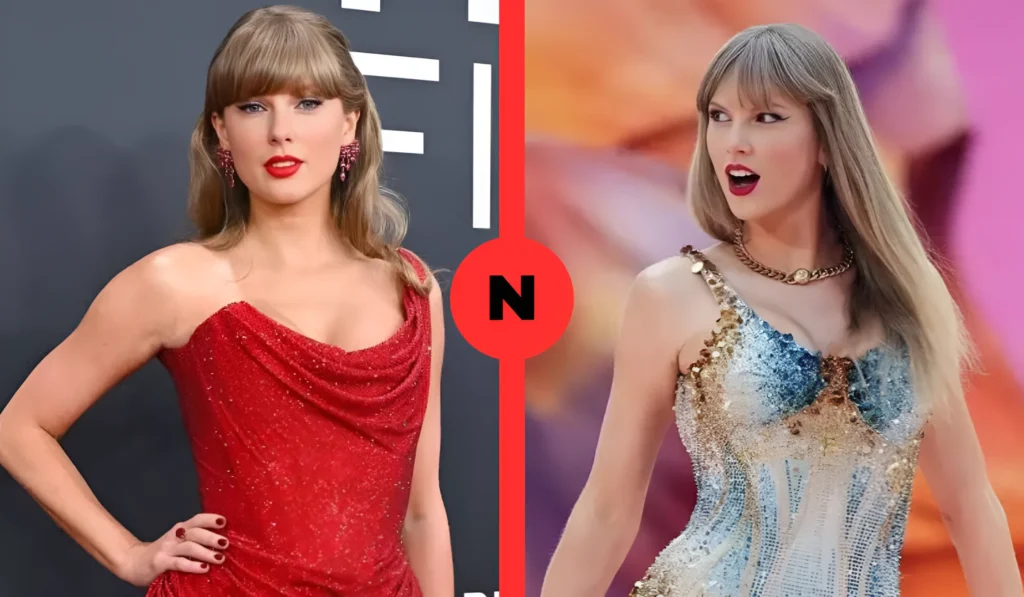
Taylor Swift has an estimated net worth of approximately $2 billion in 2026, making her one of the wealthiest musicians in the world and an extraordinary example of how an entertainment career can develop into a multibillion-dollar business. The American singer-songwriter has built her fortune through record-breaking concert tours, music sales, streaming royalties, songwriting rights,
Taylor Swift has an estimated net worth of approximately $2 billion in 2026, making her one of the wealthiest musicians in the world and an extraordinary example of how an entertainment career can develop into a multibillion-dollar business. The American singer-songwriter has built her fortune through record-breaking concert tours, music sales, streaming royalties, songwriting rights, valuable master recordings, merchandise, concert films, and real estate. Unlike many celebrities whose wealth depends heavily on businesses outside entertainment, Swift accumulated the majority of her fortune through the music she created and the enormous global audience she developed over two decades.
The financial story behind Taylor Swift’s success extends well beyond the popularity of individual songs. Her career demonstrates how songwriting ownership, long-term audience loyalty, careful management of intellectual property, and innovative approaches to distribution can transform creative work into assets worth hundreds of millions of dollars. The Eras Tour became a defining moment in this journey, generating more than $2 billion in ticket revenue and establishing a historic benchmark for live entertainment. Her decision to regain ownership of her original recordings in 2025 added another important dimension to her financial independence.
As of October 2026, Swift is 36 years old and remains one of the most commercially influential figures in global entertainment. Her wealth is based on a combination of accumulated income and valuable assets, rather than a single bank balance. Understanding how that fortune developed requires examining her early career, the extraordinary growth of her touring business, the financial importance of music ownership, and the continuing commercial value of her extensive catalog.
What Is Taylor Swift’s Net Worth in 2026?
Taylor Swift’s net worth is estimated at approximately $2 billion as of October 2026. The figure reflects the estimated value of her music-related assets, retained earnings, property holdings, and other financial interests after accounting for relevant liabilities and costs.
Her fortune has increased substantially since she first reached billionaire status in October 2023. At that time, her estimated wealth was approximately $1.1 billion, supported by the success of her music catalog and the early financial impact of the Eras Tour. By 2025, widely reported estimates placed her fortune at approximately $1.6 billion. During 2026, a major wealth assessment raised the figure to $2 billion, reflecting the continued strength of her music business and the value of her intellectual property.
An exact figure cannot be independently confirmed because Swift does not publish a complete personal balance sheet. Music catalogs, private investments, real estate, and future royalty income all involve valuation assumptions. Consequently, different financial analysts may produce estimates that vary by hundreds of millions of dollars.
Some 2026 estimates place her wealth closer to $1.8 billion, while others suggest approximately $2.1 billion. The most practical figure for understanding her financial position is around $2 billion, with the recognition that it represents an estimate rather than a verified amount of cash.
Swift’s financial position is especially notable because much of her wealth originated directly from songwriting and performing. She did not need to build an unrelated cosmetics company, clothing empire, or technology business to become a billionaire. Instead, she developed a highly profitable entertainment operation centered on the music and creative rights associated with her name.
How Did Taylor Swift Become a Billionaire?
Taylor Swift became a billionaire by combining an exceptionally successful recording career with the ability to earn revenue from several parts of the music industry simultaneously. Her income developed through album sales, songwriting royalties, streaming, international touring, merchandise, licensing, and ownership of valuable recordings.
The foundation of her financial success was established long before the Eras Tour. From the beginning of her career, Swift played an active role in writing her songs, giving her a financial interest in the underlying compositions. As her popularity increased, those songs generated income through physical music sales, digital purchases, radio broadcasts, streaming services, and licensing arrangements.
Her transition from country music into mainstream pop significantly expanded her commercial audience. Albums such as Fearless, Speak Now, Red, and 1989 demonstrated her ability to attract listeners across genres while maintaining a recognizable songwriting identity.
Touring became another important source of income. As her popularity grew, Swift moved from smaller performances to major arenas and stadiums. Larger venues created opportunities for increased ticket revenue, while merchandise and other associated sales added to the commercial value of each tour.
Her financial growth accelerated when she began releasing re-recorded versions of earlier albums. These releases created new recordings that she controlled while renewing interest in songs already familiar to millions of listeners.
The Eras Tour ultimately transformed her financial position. Its enormous audience, extensive international schedule, and unprecedented ticket revenue helped push her estimated wealth beyond the billion-dollar threshold.
Taylor Swift’s Early Life and the Beginning of Her Career
Taylor Alison Swift was born on December 13, 1989, in Reading, Pennsylvania. She grew up in a family that supported her interest in music and began developing her songwriting abilities at a young age.
Her early musical influences included country performers, and she became interested in Nashville’s recording industry while still a teenager. Recognizing the importance of being closer to the center of country music, her family moved to Tennessee to support her developing career.
Swift signed a recording agreement as a teenager and released her self-titled debut album in 2006. The project introduced her as a young country artist whose songs focused on relationships, emotions, and personal experiences.
Her ability to write relatable lyrics became one of the most important elements of her success. Rather than relying exclusively on songs created by outside writers, she established a reputation as an artist closely involved with her own material.
Her second album, Fearless, released in 2008, dramatically increased her popularity. Songs such as Love Story and You Belong with Me attracted audiences beyond traditional country music, helping establish her as an emerging international star.
By the time she released Speak Now in 2010, Swift had developed a recognizable artistic identity and a substantial commercial following.
These early years were financially important because they established the catalog of songs that would continue generating revenue throughout her career. A successful recording does not necessarily stop producing income when its original chart run ends. Music can remain commercially valuable through streaming, licensing, radio, and renewed public interest for many years.
How Much Money Did Taylor Swift Make From the Eras Tour?
The Eras Tour was one of the most financially significant entertainment events in modern music history. Running from March 2023 through December 2024, the concert series included 149 performances across multiple countries and attracted millions of fans.
Its reported ticket sales exceeded $2 billion, making it the highest-grossing concert tour ever recorded.
The scale of the tour was extraordinary. Rather than focusing on one recent album, Swift designed the production around different periods of her career, allowing audiences to experience songs from multiple musical eras during a single performance.
This concept gave the tour an unusually broad appeal. Longtime fans could revisit older material, while newer listeners had opportunities to experience songs that originally became popular years earlier.
However, the tour’s gross revenue should not be confused with Swift’s personal profit. Concert tours involve substantial expenses, including production, transportation, staging, technical equipment, venue arrangements, staffing, security, insurance, marketing, and compensation for performers and crew members.
A major stadium tour can employ hundreds of people directly and support many additional workers through local services.
Swift also awarded substantial bonuses to tour personnel, reflecting the scale of the operation and the contributions required to deliver the performances.
Although the precise personal profit from the complete Eras Tour has not been publicly disclosed in an audited financial statement, the tour made a major contribution to her rise in billionaire wealth estimates.
Its value also extended beyond ticket revenue. The tour increased music streaming, merchandise demand, public visibility, and the commercial strength of her entire catalog.
Why the Eras Tour Was So Financially Successful
The Eras Tour succeeded because it combined enormous audience demand with a carefully structured live experience. Swift had developed a dedicated international fan base over nearly two decades, and the tour provided an opportunity to celebrate multiple stages of that career within one production.
The performances were unusually long compared with many standard concert programs, featuring an extensive selection of songs organized around different albums and musical periods. Elaborate stage designs, costumes, lighting, visual effects, and choreography made the show a large-scale theatrical event.
Demand for tickets exceeded available supply in numerous cities. The intense interest surrounding the tour demonstrated the strength of Swift’s audience and the financial value of her long-term relationship with fans.
Another factor was the cultural conversation surrounding the concerts. Fans exchanged friendship bracelets, planned themed outfits, shared experiences, and traveled to attend performances. These activities created a social environment that extended beyond the music itself.
The tour also contributed to spending in cities hosting concerts. Visitors purchased hotel rooms, meals, transportation, clothing, and other services, creating additional economic activity surrounding individual shows.
Not all of that spending belonged to Swift, but it demonstrated the broader economic influence of her performances.
For her personal business, the tour’s lasting financial impact included ticket income, merchandise revenue, renewed interest in older recordings, and increased demand for music-related products.
The Eras Tour therefore represented more than one successful concert series. It strengthened several existing revenue streams while creating new opportunities for the future.
Taylor Swift’s Music Catalog and Its Financial Value
One of the largest components of Taylor Swift’s fortune is the value of her music catalog. This includes rights associated with her songwriting and recordings, both of which can generate revenue through multiple channels.
Music catalogs are valuable because successful songs may continue earning money long after their original release. Streaming services, radio, television productions, films, advertisements, and other licensing arrangements can create recurring income.
Swift has released a substantial collection of commercially successful songs, many of which remain popular years after first appearing.
Her catalog also spans multiple musical styles, including country, pop, folk-influenced songwriting, and alternative arrangements. This range provides opportunities for different songs to remain relevant to various audiences and uses.
Financial estimates have valued her music-related rights at hundreds of millions of dollars. However, the exact amount depends on assumptions about future royalties, ownership, licensing opportunities, and the wider music market.
A catalog’s estimated worth should not be confused with money that has already been received. It represents the potential market value of assets that could continue producing income or be sold under appropriate circumstances.
For Swift, maintaining ownership of her music has become a defining part of her career and financial strategy.
Taylor Swift’s Masters Ownership and the $360 Million Deal
One of the most important developments in Taylor Swift’s financial history occurred in May 2025, when she announced that she had regained ownership of the master recordings associated with her first six studio albums.
The issue had attracted substantial attention since 2019, when her former record label and its assets were sold as part of a business transaction that placed control of her earlier master recordings outside her ownership.
Swift subsequently began re-recording earlier albums, releasing new versions under the Taylor’s Version branding.
These projects allowed her to own new master recordings of familiar songs while offering fans versions directly associated with her own ownership and creative decisions.
The strategy proved commercially successful. Re-recorded albums attracted substantial listener interest, introduced older material to new audiences, and demonstrated that established songs could generate new revenue when presented through a different ownership structure.
In 2025, Swift completed a transaction to purchase the original masters and related rights associated with her earlier music.
The reported purchase price was approximately $360 million, although the complete financial terms were not publicly disclosed in full.
The deal represented an important milestone because it reunited Swift with recordings that had become central to her artistic identity and commercial career.
From a financial perspective, ownership can provide greater control over licensing decisions and future uses of recordings. It also gives the owner exposure to the ongoing economic value of the music.
The transaction did not simply add the purchase price to Swift’s net worth. Acquiring an asset involves exchanging money or other resources for ownership. Its effect on wealth depends on the asset’s market value, financing arrangements, and future income.
Nevertheless, the acquisition strengthened her control over one of the most valuable parts of her entertainment business.
Streaming has become a significant part of Taylor Swift’s continuing income because her music attracts enormous listening audiences around the world.
Platforms such as Spotify, Apple Music, YouTube Music, and other digital services generate revenue for rights holders when songs are played. The amount ultimately received depends on licensing arrangements, the type of rights involved, geographic markets, subscription models, and other contractual factors.
Swift benefits from having an extensive catalog rather than relying exclusively on newly released songs. Her older albums continue attracting listeners, while new releases often encourage fans to revisit previous material.
This creates a continuing commercial cycle. A successful new album can introduce listeners to earlier recordings, while popular older songs maintain audience interest between releases.
Streaming royalties also demonstrate why songwriting and recording ownership matter. Different rights generate different income streams, and the people or companies controlling those rights may receive payments under separate agreements.
It would be inaccurate to calculate Swift’s exact personal streaming income by multiplying total streams by a single universal payment rate. Music streaming compensation is more complicated than a fixed amount paid directly to an artist for every play.
Her total annual streaming earnings have not been independently established through complete private financial records.
Nevertheless, the scale and durability of her listening audience make digital music consumption an important component of her overall wealth.
Taylor Swift’s Album Sales and Recording Success
Taylor Swift’s financial success began with album sales long before streaming became the dominant way many people consumed music.
Her early releases attracted strong demand for physical CDs and digital downloads. As her career developed, album launches became major entertainment events supported by dedicated fans, promotional campaigns, and extensive public interest.
The release of 1989 in 2014 marked a particularly important moment because it completed her highly successful transition into mainstream pop music.
Subsequent albums demonstrated her ability to maintain commercial momentum while experimenting with different musical styles.
Reputation, Lover, Folklore, Evermore, and Midnights each contributed to her catalog and expanded her artistic identity.
The Tortured Poets Department, released in April 2024, became another major commercial success. Its release reinforced Swift’s position as an artist capable of generating enormous interest in new material despite already having an extensive recording career.
In October 2025, she released The Life of a Showgirl, adding another major studio project to her discography. Its commercial performance further contributed to the continuing value of her catalog.
Physical formats have remained particularly important to Swift’s business. Vinyl records, CDs, and collectible editions appeal to fans who want to own music in addition to accessing it digitally.
However, the retail price of an album is not equivalent to Swift’s personal income from that sale. Manufacturing, distribution, retail margins, contractual obligations, and other costs affect how revenue is divided.
The significance of her album business lies in its consistency and variety. Swift has generated commercial demand across different formats and changing consumer habits, allowing her music to remain valuable even as the industry has evolved.
Taylor Swift’s Real Estate Portfolio
Taylor Swift’s wealth also includes a substantial collection of luxury residential properties in the United States.
Her real estate holdings have been estimated at more than $100 million, although valuations differ because private property values change and individual transactions are not always disclosed in detail.
Her known residential interests have included properties in New York City, Rhode Island, Tennessee, and California.
One of her most recognizable homes is an oceanfront property in Watch Hill, Rhode Island. The residence became widely associated with her summer gatherings and her personal connection to the New England coastline.
In New York City, Swift has owned property in Manhattan’s Tribeca neighborhood, an area known for historic buildings, luxury apartments, and high-profile residents.
She has also maintained connections with Nashville, the city that played a major role in the development of her early music career.
In Beverly Hills, California, Swift acquired a historic estate associated with film producer Samuel Goldwyn. The property became another notable part of her real estate portfolio because of its architectural and entertainment history.
These holdings represent assets rather than annual income. Their contribution to net worth depends on their estimated current value and any associated liabilities.
Luxury properties can also involve significant ownership costs, including maintenance, staffing, insurance, taxes, and renovations.
Therefore, real estate values should not be treated as liquid cash or assumed to generate consistent profits.
For Swift, property ownership provides both personal residences and long-term assets that form part of her estimated financial position.
How Much Does Taylor Swift Make From Merchandise?
Merchandise represents another important component of Taylor Swift’s entertainment business.
Fans purchase clothing, posters, accessories, collectible products, and other items connected with her albums and tours. These sales create additional income beyond concert tickets and recorded music.
The Eras Tour provided a particularly strong merchandise opportunity because audiences attending concerts often wanted physical souvenirs associated with the experience.
Swift’s merchandise business also benefits from album releases. New recordings can be accompanied by exclusive designs, limited-edition products, and collectible packages that encourage fans to purchase items alongside the music.
This approach allows the artist’s creative identity to extend into physical products.
However, merchandise revenue is not equivalent to personal profit. Products must be manufactured, stored, distributed, marketed, and sold. Retail operations also involve staffing, fulfillment, customer service, and other expenses.
The exact profit Swift personally retains from merchandise has not been fully disclosed.
What can be established is that merchandise forms part of a broader commercial ecosystem in which music, live performances, and physical products reinforce one another.
For an artist with a large and engaged audience, the opportunity to sell related products can remain financially significant even between major tours.
Taylor Swift’s Concert Film Earnings
Taylor Swift expanded the financial impact of the Eras Tour by bringing the concert experience into movie theaters.
Taylor Swift: The Eras Tour was released theatrically in October 2023 and achieved major commercial success.
The film allowed people who could not attend a live concert to experience a professionally recorded version of the production. It also gave concertgoers an opportunity to revisit performances in a different setting.
Its theatrical release was particularly significant because Swift pursued a distribution approach that differed from some conventional studio arrangements.
By developing a commercial strategy specifically suited to her project, she demonstrated how an established artist could use an existing fan base to support a major entertainment release outside the traditional album-and-tour format.
The movie generated substantial worldwide box office revenue, although total ticket sales should not be treated as money that went directly to Swift.
Theaters, distributors, production participants, and other parties receive portions of commercial revenue, while the production itself incurs expenses.
The film also created opportunities for later digital and streaming distribution.
Its broader importance lies in demonstrating how a successful concert production can become a separate entertainment asset with its own audience and commercial life.
Taylor Swift’s Brand Endorsements and Business Partnerships
Throughout her career, Taylor Swift has participated in advertising and commercial partnerships with major brands.
Such arrangements can include promotional campaigns, branded content, appearances, licensing agreements, and other forms of commercial cooperation.
Her celebrity status makes her attractive to companies seeking access to large consumer audiences, particularly those interested in music, fashion, lifestyle, and entertainment.
However, endorsement income is not necessarily the dominant component of Swift’s wealth.
Unlike some celebrity entrepreneurs whose fortunes primarily come from owning substantial stakes in unrelated consumer brands, Swift’s financial success is heavily connected to music.
Her public image is itself a commercial asset, but the economic value of that image is difficult to calculate separately from the songs, tours, and recordings that made her famous.
Exact payments from individual endorsements are often confidential.
As a result, websites that publish highly precise estimates of her annual endorsement income without supporting financial disclosures should be approached cautiously.
The important distinction is that partnerships add another revenue opportunity to an already extensive entertainment business rather than explaining the majority of her estimated $2 billion fortune.
How Much Does Taylor Swift Make Per Concert?
The question of Taylor Swift’s earnings per concert has attracted enormous interest since the success of the Eras Tour.
The tour generated approximately $2.08 billion in reported ticket revenue across 149 performances, producing an average gross ticket revenue of nearly $14 million per show.
That figure is a useful way to understand the extraordinary commercial scale of the tour.
However, it is not an estimate of Swift’s personal earnings from each performance.
Concert revenue must support production expenses, musicians, dancers, technical personnel, venue arrangements, transportation, insurance, security, taxes, and numerous other costs.
The financial structure of a tour also depends on contracts and arrangements that are not fully public.
Some concerts may generate higher revenue than others because stadium capacity, ticket prices, and local market conditions vary.
Consequently, dividing total ticket revenue by the number of shows reveals average gross revenue, not the amount Swift personally received.
Her individual profit would be lower than the gross amount and cannot be established precisely from public ticket figures alone.
Is Taylor Swift the Richest Female Musician?
Taylor Swift is widely estimated to be the wealthiest female musician in the world as of 2026.
Her approximately $2 billion fortune places her above other prominent female recording artists in several widely reported wealth assessments.
What makes her position particularly noteworthy is how she accumulated that wealth.
Many extremely wealthy entertainers have built substantial fortunes through investments, fashion businesses, cosmetics companies, or ownership interests outside their original professions.
Swift’s financial success has been especially concentrated in songwriting, recorded music, touring, and related entertainment assets.
This distinction highlights the commercial power of intellectual property.
When an artist controls valuable creative work that continues attracting audiences, that work can become a long-term financial asset.
However, wealth rankings can change because private business valuations, property estimates, investment prices, and other financial factors are not fixed.
Describing Swift as the richest female musician in 2026 is therefore a statement based on available estimates rather than a permanent title that cannot change.
Taylor Swift’s Philanthropy and Charitable Giving
Taylor Swift has also used her financial resources to support charitable causes throughout her career.
Her public giving has included disaster relief, food assistance, education-related causes, and support for individuals and communities experiencing hardship.
During the Eras Tour, contributions to food banks in cities hosting performances attracted attention because they connected one of the world’s largest entertainment productions with local community needs.
Swift has also supported relief efforts after natural disasters and made contributions connected with public tragedies.
These activities are an important part of her public financial story, but they should not be confused with business investments.
Charitable donations generally reduce resources available for personal use rather than creating a direct addition to net worth.
The full amount of Swift’s lifetime charitable giving has not been independently established through a comprehensive public accounting.
Individual donations can be documented when recipients announce them, but private contributions may never become public.
It would therefore be misleading to assign a precise total to her philanthropy without complete evidence.
How Taylor Swift’s Net Worth Changed Over the Years
Taylor Swift’s financial growth has followed the development of her music career, but it accelerated sharply during the period surrounding the Eras Tour.
Earlier in her career, income from album sales, touring, songwriting, and endorsements helped her accumulate substantial wealth.
By the late 2010s, she had already become one of the highest-earning performers in the world.
The next major stage involved greater control over music rights, the commercial success of her newer albums, and the re-recording of earlier releases.
Her estimated wealth reached approximately $1.1 billion in October 2023. That milestone followed the beginning of the Eras Tour and reflected both substantial accumulated earnings and valuable music-related assets.
By 2025, commonly reported estimates placed her fortune around $1.6 billion.
In 2026, estimates reached approximately $2 billion.
These figures should be understood as snapshots rather than an audited year-by-year accounting.
The estimated value of a music catalog can change substantially even when its owner does not receive an equivalent amount of cash during the same period.
Likewise, purchasing valuable rights can increase control over future revenue without representing an immediate cash profit.
Swift’s financial trajectory demonstrates the importance of developing assets that can continue producing value beyond the original release of a song or completion of a concert tour.
Is Taylor Swift’s Entire $2 Billion Fortune in Cash?
No. Taylor Swift’s estimated net worth should not be confused with the amount of money available in a checking or savings account.
Net worth represents the value of assets minus liabilities.
For Swift, those assets include music rights, retained earnings, investments, real estate, and other financial interests.
A music catalog might have an estimated value of hundreds of millions of dollars, but that amount would not necessarily be immediately available for spending.
To convert the catalog into cash, the owner might need to sell some or all of the rights, and the actual sale price could differ from the estimated valuation.
Real estate operates similarly. A property may be worth millions of dollars, but the owner does not receive that amount unless the property is sold or used in a financial transaction.
This distinction is especially important when reading celebrity net worth articles.
A billionaire can own valuable assets while holding a much smaller portion of their wealth in readily available cash.
Taylor Swift’s financial position is therefore best understood as the estimated total value of a substantial entertainment business and personal asset portfolio.
Frequently Asked Questions About Taylor Swift’s Net Worth
What is Taylor Swift’s net worth in 2026?
Taylor Swift’s estimated net worth is approximately $2 billion as of October 2026. The figure reflects her music catalog, touring and royalty earnings, investments, and real estate. It is an independent estimate rather than an officially disclosed personal balance sheet.
When did Taylor Swift become a billionaire?
Taylor Swift first reached an estimated net worth of $1 billion in October 2023. Her historic Eras Tour and valuable music catalog were major factors in reaching that milestone.
How much money did Taylor Swift make from the Eras Tour?
The Eras Tour generated approximately $2.08 billion in gross ticket revenue from 149 performances. Swift’s personal profit was substantially less than total ticket revenue because of production expenses and other costs. Her exact take-home earnings have not been publicly disclosed.
How much is Taylor Swift’s music catalog worth?
Her music catalog has been valued in the hundreds of millions of dollars. Estimates differ depending on which recording and publishing rights are included, future royalty expectations, and market conditions.
Does Taylor Swift own her masters?
Yes. In May 2025, Swift announced that she had reacquired ownership of the original master recordings of her first six studio albums. She also controls the master recordings associated with her more recent work.
How much does Taylor Swift make from Spotify?
Taylor Swift earns royalties from music streaming, but her exact personal Spotify income is not publicly disclosed. Payments depend on licensing arrangements, rights ownership, and the distribution of revenue among rights holders.
Is Taylor Swift richer than Beyoncé?
Published 2026 wealth estimates generally place Taylor Swift ahead of Beyoncé. However, comparisons depend on valuation methods and can change as artists’ assets and businesses grow.
How much real estate does Taylor Swift own?
Her publicly known real estate portfolio includes luxury properties associated with New York City, Rhode Island, Nashville, and Beverly Hills. Its estimated value exceeds $100 million, although the exact current total is not publicly confirmed.
How old is Taylor Swift in 2026?
Taylor Swift was born on December 13, 1989, making her 36 years old as of October 2026. She will turn 37 in December.
Is Taylor Swift a self-made billionaire?
Taylor Swift is commonly described as a self-made billionaire because her fortune was built predominantly through her professional music career. The description does not mean she had no family support or industry assistance. It refers to the primary origin of her accumulated wealth.
Final Thoughts
Taylor Swift’s estimated $2 billion net worth in 2026 represents one of the most remarkable financial achievements in modern entertainment. Her fortune developed through a combination of songwriting, recorded music, world tours, licensing, streaming, merchandise, and increasingly valuable ownership rights.
The Eras Tour played a major role in accelerating her wealth, but its success was built on years of music releases and audience development. Her decision to re-record earlier albums and eventually regain ownership of her original masters further demonstrated the financial importance of controlling creative work.
Swift’s story is not simply about becoming a highly paid performer. It is about turning an extensive collection of songs and performances into a long-term commercial enterprise with enduring value.
Although her precise personal wealth cannot be established without private financial records, the available estimates place her firmly among the wealthiest musicians in history.
Her career illustrates how sustained creative success, strong audience relationships, and strategic ownership decisions can transform artistic achievements into substantial financial independence.
RELATED POSTS;
Bobby Brown Net Worth 2026: How Much Is the R&B Legend Worth Today?
Ms Rachel Net Worth: How the Children’s Educator Built Her Fortune
Tee Grizzley Net Worth 2026: How Much Does the Rapper Make From Music and Gaming?



















Leave a Comment
Your email address will not be published. Required fields are marked with *