
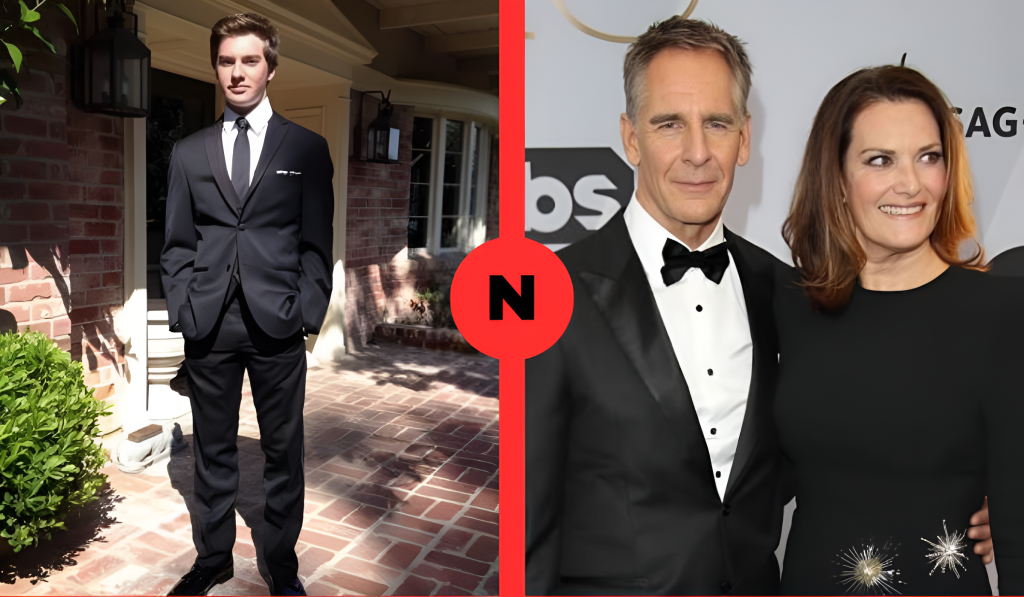
When a person grows up with a famous surname, the public often wants the simplest explanation: whose child are they, what do they do, and did they follow the family business? Wil Bakula makes those questions more interesting because the answers lead away from the obvious Hollywood route. Wil is the son of actor Scott
When a person grows up with a famous surname, the public often wants the simplest explanation: whose child are they, what do they do, and did they follow the family business? Wil Bakula makes those questions more interesting because the answers lead away from the obvious Hollywood route.
Wil is the son of actor Scott Bakula, the Emmy- and Golden Globe-recognized star associated with Quantum Leap, Star Trek: Enterprise, and NCIS: New Orleans. His mother is actress Chelsea Field, giving him a family connection to two established performers. Yet Wil’s own public creative record is rooted not in acting but in music. He has developed a career as a producer, keyboardist, composer, and musician, particularly through the Portland-based duo Foamboy.
That distinction matters. Wil Bakula is certainly known partly because of his family, but his professional story does not end with the words “Scott Bakula’s son.” Public music credits show him writing, producing, arranging, and performing across a body of independent work. His story is therefore less about celebrity inheritance and more about what happens when someone born into an entertainment family chooses a different corner of the creative world.
Quick Bio
| Fact | Details |
|---|---|
| Full Name | Wil Bakula |
| Birth Year | 1995 |
| Nationality | American |
| Profession | Musician, producer, keyboardist, composer |
| Known For | Music work and his family connection to Scott Bakula and Chelsea Field |
| Father | Scott Bakula |
| Mother | Chelsea Field |
| Siblings | Chelsy Bakula, Cody Bakula, Owen Bakula |
| Main Musical Project | Foamboy |
| Musical Base | Portland, Oregon |
| Education | Willamette University is publicly documented in connection with his music research and performance |
| Notable Work | My Sober Daydream, Eating Me Alive, STUPID HOT |
| Musical Roles | Production, keyboards, synths, piano, MIDI drums, songwriting |
The 1995 birth year is supported by public biographical records, while more specific birth-date claims circulate online without the same level of independent confirmation. For that reason, this profile does not present an exact day of birth as established fact. Public sources, including AllMusic, also document Wil’s credits as a composer.
A Famous Family, but a Different Kind of Career
The easiest way to understand the public curiosity around Wil Bakula is to start with his surname.
Scott Bakula has spent decades moving between television, film, Broadway, and other forms of performance. His breakthrough as Dr. Sam Beckett in Quantum Leap made him a familiar face to television audiences, while his later role as Captain Jonathan Archer in Star Trek: Enterprise established him as a major figure in science-fiction television. He subsequently played Special Agent Dwayne “King” Pride in NCIS: New Orleans.
Chelsea Field, Wil’s mother, has her own substantial screen career. She worked in film and television and became particularly familiar to audiences through projects including Masters of the Universe and, later, NCIS: New Orleans. Her professional history means that Wil’s upbringing was connected to entertainment from both sides of his family.
But having famous parents does not automatically produce a person who wants to become famous themselves.
That is one of the more revealing aspects of Wil Bakula’s public profile. There is no substantial record of him attempting to recreate his father’s acting career. Instead, his documented creative work points toward instruments, production, composition, and independent music.
It creates an interesting contrast. Scott Bakula’s career is built around inhabiting characters and carrying large television productions. Wil’s work is much more concerned with constructing sound from behind the scenes and within a collaborative musical environment.
That difference is arguably more interesting than the family connection itself.
For readers exploring entertainment stories beyond conventional celebrity biographies, the distinction between inherited fame and independently developed creative work is often where the most compelling stories begin. It is also the kind of subject that fits naturally alongside the broader entertainment stories covered by Nora Magazine.
The Bakula Family Tree Explains Much of the Curiosity
Wil Bakula is one of four children associated with Scott Bakula.
Scott’s first marriage was to actress and producer Krista Neumann. They had two children, Chelsy and Cody. Scott later became the partner of Chelsea Field, and the couple had two children, Wil and Owen. Scott and Field married in 2009 after a long relationship.
That family structure is important because several searches surrounding Wil use phrases such as “Krista Neumann Wil Bakula.” The connection is real at the family level, but it can easily be misunderstood: Krista Neumann is not Wil Bakula’s mother. She is the mother of Scott Bakula’s older children, Chelsy and Cody. Wil’s mother is Chelsea Field.
Likewise, searches for “Wil Bakula siblings” generally lead to the four-child structure of Scott Bakula’s family. Wil’s siblings are Chelsy Bakula, Cody Bakula, and Owen Bakula. Chelsy and Cody are his older half-siblings through Scott’s earlier marriage, while Owen is his younger full sibling through Scott and Chelsea Field.
This distinction is worth making because celebrity-family searches can quickly turn into recycled inaccuracies. A profile of Wil should not treat every person connected to the Bakula family as his immediate parent or sibling.
What We Know About Wil’s Early Years
There is considerably less reliable public material about Wil’s childhood than there is about his father’s career.
That is not necessarily surprising. Scott Bakula became famous as an actor, while Wil has not built his identity around television interviews, celebrity events, or a highly public personal life. Consequently, the available record is much stronger when it comes to his later music activities than intimate details of his childhood.
What can reasonably be established is that Wil grew up within an entertainment-oriented family and eventually developed a serious interest in music. His father’s own relationship with music is notable as well. Scott has described musical interests dating back to childhood, and his professional career has included singing and stage performance in addition to screen acting.
It would be tempting to turn that into a neat story about a father passing a love of music to his son. But there is not enough public evidence to make such a personal claim with certainty.
What is clearer is that music became Wil’s own professional language.
Rather than using the family name as the center of his public identity, he has appeared in independent music credits where the work itself takes precedence. That makes his biography unusual among celebrity-family profiles.
The Academic Side of His Musical Development
One of the most useful pieces of public evidence about Wil Bakula’s development comes not from celebrity media but from Willamette University.
Willamette’s records identify Wil as a participant in the university’s music-related scholarship and performance activities. A 2017 Carson Grant listing names his research project, “Musicians of Portland and New Orleans: An Investigation into the Cultural Effects on Creative Processes,” sponsored by music faculty member Mike Nord.
The subject of that research is revealing.
Rather than examining music only as a technical discipline, the project considered the relationship between musicians and the environments in which they create. Portland and New Orleans are both cities with distinctive musical cultures, but they represent very different histories, communities, traditions, and creative ecosystems.
That kind of question fits remarkably well with the career Wil later developed in Oregon.
His musical work would become closely associated with Portland, a city with a substantial independent-music community and a reputation for experimentation. The academic record does not prove that the research directly determined his later career, but it does provide a documented glimpse into the kind of musical questions that interested him.
Willamette also lists Wil Bakula as the pianist in a 2018 Student Scholarship Recognition Day performance described as a collective improvisation. He performed alongside Nicholas Burton on bass, Brighton Sier on trombone, and Olivia Fields on alto saxophone.
That detail matters because improvisation is fundamentally collaborative.
It requires musicians to listen as much as they play. A pianist in an improvisational setting cannot simply reproduce a predetermined part; they have to respond to the musicians around them, recognize rhythmic and harmonic possibilities, and make decisions in real time.
Those skills have obvious relevance to the kind of production and ensemble work that would later define Wil’s public musical career.
From the Classroom to Chromatic Colors
Before Foamboy became the project most closely associated with Wil Bakula, he and vocalist Katy Ohsiek worked together in the experimental musical collective Chromatic Colors.
The group’s own Bandcamp material and Foamboy’s official press information establish an important part of this history. Wil and Katy met in Salem, Oregon, and spent years collaborating with other musicians before forming Foamboy. Chromatic Colors explored an unusually broad collection of sounds, including electronic music, funk, jazz, experimental rock, and other styles.
This period helps explain why describing Wil simply as a “pop musician” can be misleading.
His creative background is rooted in experimentation. The Chromatic Colors material credits Wil with production and instrumentation, while the project included a variety of collaborators rather than functioning as a narrowly defined commercial pop act. The 2020 Misfits EP (demos), for example, describes material ranging from hard rock and metal to psychedelic and orchestral electronic ideas, with Wil credited for the other instruments, production, and mixing.
That breadth would become useful later.
Independent music often rewards artists who can move between roles. A producer may need to understand harmony, arrangement, recording, instrumentation, editing, and the personalities of the performers involved. Wil’s public credits show precisely that kind of multi-role participation.
Foamboy Was the Turning Point
If there is one project that gives the clearest picture of Wil Bakula as an artist, it is Foamboy.
Foamboy is a Portland-based duo consisting of Wil as producer and Katy Ohsiek as vocalist. According to the duo’s official biography, the pair had been collaborating musically since 2016 before turning their attention to Foamboy. Their first album, My Sober Daydream, arrived in 2021.
The project’s identity is deliberately difficult to squeeze into one genre.
Its official description emphasizes West Coast pop, jazz-inspired dance music, and highly personal lyrics. Other descriptions of the project highlight disco, funk, electronic music, indie pop, and R&B influences. The result is music that can feel polished and dance-oriented while still retaining an experimental edge.
Wil’s role is especially significant because he is not merely a performer within Foamboy.
He is the producer and a central architect of its instrumental sound.
Katy’s voice provides the human focal point, while Wil’s production creates the musical environment around it. Synthesizers, keys, piano, electronic percussion, bass, guitar, and other elements can occupy different positions depending on the song.
The arrangement therefore becomes part of the storytelling.
Why Foamboy Sounds Different
The most interesting aspect of Wil Bakula’s work may be the tension between accessibility and experimentation.
Foamboy’s music is built to move. It frequently draws from disco and dance-pop, but the production is not simply designed for easy background listening. There are unusual textures, shifts in mood, electronic layers, and lyrical themes that push the music into more personal territory.
The duo’s official press material describes its work as “jazz-inspired danceable pop” with a personal lyrical focus. Its influences and references extend across funk, disco, electronic pop, and experimental sounds.
That mixture makes Wil’s role especially important.
A producer in this setting has to solve two problems at once. The music needs enough structure to communicate immediately, but it also needs enough character to avoid sounding generic.
Foamboy’s catalog suggests an ongoing attempt to find that balance.
The debut My Sober Daydream introduced the duo’s approach. Its follow-up, Eating Me Alive, released in 2024, expanded the palette and became a more ambitious project sonically. PDX Jazz described the album as combining electronic and live instruments and noted that the songs moved through disco, electronic ballads, dreamy passages, and distorted psychedelic-pop territory.
My Sober Daydream Established the Foundation
Released in 2021, My Sober Daydream was the first full-length Foamboy statement.
The album represented the point at which Wil Bakula and Katy Ohsiek stopped functioning primarily as collaborators within a broader musical community and established a project with its own recognizable identity.
The official Foamboy biography says the album helped push the duo into a new stage of its career and brought recognition from outlets including KCRW, Consequence of Sound, and Week in Pop.
The album’s importance is not simply that it exists in the discography.
It established a creative formula: Katy’s vocal personality and lyrics on one side, Wil’s synth-centered production and arrangement on the other, with the two meeting in a space influenced by dance music, funk, jazz, and indie pop.
That formula allowed Foamboy to sound like a band rather than a producer simply providing backing tracks.
Eating Me Alive Made the Sound More Ambitious
The next major step was Eating Me Alive, released in March 2024.
Its credits make Wil’s contribution especially clear. He is credited as producer and as a performer on keys, piano, and synth. He and Katy share songwriting credits, while a wider group of musicians contributes bass, drums, guitar, trumpet, percussion, and other parts.
The album therefore illustrates another important part of Wil’s career: collaboration does not mean surrendering a distinct production vision.
PDX Jazz described the project as a darker sonic landscape compared with the group’s earlier work. The organization also noted that the album reflected the duo’s experience working with a larger seven-piece band and combined electronic and live instrumentation.
That expansion is meaningful.
Electronic production can create precision and atmosphere, while live instrumentation introduces physicality and unpredictability. Bringing the two together requires careful arrangement. Wil’s production credits suggest that he occupies the center of that process.
The result is a catalog that feels less like a single formula and more like an evolving conversation between electronic production and traditional musicianship.
A Producer Who Still Plays
One misconception that can arise when talking about Wil Bakula is the assumption that “producer” means someone who stays entirely behind a computer.
His credits suggest otherwise.
On Foamboy’s recordings, Wil is repeatedly credited with keyboards, piano, synths, and electronic percussion. On STUPID HOT, released July 10, 2026, the credits list him as the performer of all keyboards, synths, piano, and MIDI drums, as well as producer. He and Katy Ohsiek share writing credits across the album.
That makes the word “producer” only part of the story.
Wil is involved at the compositional and instrumental levels, shaping musical ideas rather than simply overseeing a recording session.
This is one reason his academic background in music and his earlier improvisational work are useful pieces of context. The public record connects his education, performance experience, collaborative projects, and later production work into a coherent creative trajectory.
The 2026 Chapter: STUPID HOT
Wil Bakula’s current relevance is particularly strong because Foamboy’s newest full-length project arrived in 2026.
The album ** STUPID HOT ** was released on July 10, 2026. Its credits identify Wil as producer and as the performer of keyboards, synths, piano, and MIDI drums, while the songwriting is shared between Wil and Katy Ohsiek.
The official Foamboy biography describes the album as moving further toward house-inspired dance music, with moody synthesizer textures and haunting vocal melodies. Its themes include self-alienation, aging, climate change, and the pressure of failing to live up to expectations.
Those themes are particularly interesting in the context of Wil’s broader story.
A person whose public identity is frequently reduced to his family name is working on an album concerned, at least in part, with expectations and identity. It would be too speculative to claim the album is autobiographical or specifically about Wil’s experience as Scott Bakula’s son. But the thematic overlap makes the work culturally interesting.
The music exists independently of the family connection.
And that is precisely the point.
The Wil Bakula–Katy Ohsiek Creative Partnership
A major part of Wil’s professional story cannot be separated from his collaboration with Katy Ohsiek.
Their working relationship predates Foamboy. The duo’s official biography states that they have collaborated musically since 2016, first through other projects and later through Foamboy.
Their partnership works because the two artists occupy complementary roles without being isolated from one another.
Katy is the vocalist and lyricist, while Wil’s primary contributions involve production and instrumentation. Yet their credits repeatedly show shared songwriting. That means Foamboy’s music is not simply “a singer over a producer’s beats.”
It is a joint creative process.
The distinction is important because successful producer-vocalist partnerships depend on trust. A producer must understand how a singer’s voice works emotionally and technically. A vocalist must be willing to experiment with arrangements, textures, and structures.
Foamboy’s longevity suggests that the partnership has developed beyond a one-album experiment.
The pair have now built multiple releases, live performances, festival appearances, and an expanding catalog together. Their official biography notes appearances at festivals including SXSW, Belltown Bloom, and Pickathon, as well as opening slots for artists such as Haiku Hands and Say She She.
Portland Became More Than a Location
Portland is not simply a city appearing beside Foamboy’s name.
It has become part of the project’s artistic identity.
The duo is repeatedly described as Portland-based, and its earlier musical history also connects Wil and Katy with Salem, Oregon.
That matters because independent music scenes provide something that a conventional Hollywood environment often does not: proximity.
Musicians encounter one another in small venues, rehearsal rooms, community events, college programs, informal collaborations, and local festivals. A producer can build a network without needing the machinery of a major entertainment company.
Wil’s career illustrates that alternative route.
He grew up with access to one kind of entertainment infrastructure through his parents, but his professional musical identity developed through another: education, collaboration, local music communities, independent releases, and live performance.
That contrast is one of the most compelling features of his story.
What About “Scott Bakula Wil Bakula”?
Searches combining Scott Bakula and Wil Bakula are understandable because the father-son relationship is the starting point for much of the public interest.
Scott Bakula’s career is extensive enough that almost any discussion of his children inevitably intersects with his professional history. He is a Golden Globe-winning actor, a Tony Award nominee, and the lead of several major television series. His biography also documents a long connection to stage performance and music.
But Wil’s significance does not depend entirely on his father’s achievements.
In fact, the contrast between the two careers makes Wil more interesting.
Scott became famous through acting, while Wil works primarily through music production and performance. Scott’s most recognizable roles involve characters, dialogue, and large television productions. Wil’s public credits are attached to songs, albums, arrangements, instruments, and independent collaboration.
The surname opens the door to curiosity.
The music gives people a reason to stay.
The “Wil Bakula Cody Bakula” Connection
Another common search combination is “Wil Bakula Cody Bakula.”
Cody is Wil’s older half-brother and one of Scott Bakula’s two children from his first marriage to Krista Neumann. Public sources identify Cody alongside Chelsy, Wil, and Owen as Scott’s four children.
There is comparatively little authoritative information about Cody’s adult life in mainstream sources.
That lack of information should not be filled with speculation. The same principle applies to Wil. A family connection does not automatically make every detail of a person’s private life public information.
What is interesting about the siblings is that the four children occupy different places within a blended family connected to two marriages and two established entertainment careers.
Yet the children themselves have generally not become a conventional celebrity-family ensemble.
That is particularly noticeable when compared with families where every generation is heavily represented in television, film, or social media.
Public Recognition Without Traditional Celebrity
Wil Bakula’s public recognition operates differently from his father’s.
Scott’s name immediately identifies a performer. Wil’s name requires more context. Someone may encounter it through a Foamboy credit, a music database, a concert listing, or a search connecting him to Scott Bakula.
This is a different kind of fame.
It is closer to recognition within a creative niche than mainstream celebrity.
AllMusic, for example, maintains a Wil Bakula artist page with composition credits connected to Foamboy recordings including “Song About You” and “Not a Go.”
His work has also been documented by music organizations and independent music outlets. PDX Jazz has identified Foamboy as a Portland duo featuring Wil as producer and Katy as vocalist, while the group’s own press materials record radio appearances, festival performances, and critical attention.
This is a useful reminder that public recognition does not always mean tabloid visibility.
An artist can be professionally significant within a scene without becoming a household name.
Why His Private Life Remains a Smaller Part of the Story
There is a natural temptation to search for Wil Bakula’s relationships, lifestyle, finances, or private routines because celebrity-family profiles often encourage that kind of curiosity.
But there is little value in manufacturing a detailed personal narrative where reliable evidence does not exist.
Wil’s public record is strongest in music.
That is where the story becomes verifiable and meaningful: his university music work, collaborative performances, Chromatic Colors, Foamboy, production credits, songwriting, albums, and live appearances.
By comparison, claims about his private relationships or precise financial position are not supported by similarly strong public documentation. There is no reliable basis for presenting a specific net worth figure as fact.
That distinction is especially important for a person who has not built a public persona around personal disclosure.
Privacy is not a missing chapter that an article needs to fill.
Sometimes it is part of the story.
What Makes Wil Bakula Interesting Beyond His Family Name?
The strongest answer is simple: he demonstrates how a person can inherit a connection to entertainment without inheriting a career path.
Wil could have been introduced to the public solely as Scott Bakula’s son. Instead, his documented work gives him another identity.
He is a producer.
He is a keyboardist.
He is a composer.
He is a collaborator.
And through Foamboy, he has helped create a body of independent music that exists on its own terms.
His story also reflects a broader shift in the music industry. Modern musicians do not always fit neatly into the old categories of singer, instrumentalist, songwriter, or producer. One person may perform several of those roles simultaneously.
Wil’s credits demonstrate that hybrid approach.
The producer is also the keyboard player. The instrumentalist is also a songwriter. The composer is also involved in arrangement and recording. The independent musician is also part of a larger live ensemble.
That versatility may ultimately be more important to his professional identity than the famous family name that first attracts attention.
The Bigger Picture: Choosing the Work Over the Spotlight
There is an appealing irony in Wil Bakula’s career.
He comes from a family in which being visible is part of the profession. His father spent decades in front of cameras and on stages. His mother also built a career through acting.
Wil’s own public work, however, frequently puts the emphasis somewhere else.
The music comes first.
The production comes first.
The collaboration comes first.
That does not mean he has rejected his family or the entertainment world. Quite the opposite: he has embraced creativity while selecting a different medium.
This is why reducing him to “Scott Bakula’s son” misses the most interesting part of his story.
Family explains the curiosity.
Music explains the career.
Where Wil Bakula Stands Now
As of 2026, Wil Bakula is in an especially active period professionally.
Foamboy’s STUPID HOT arrived in July 2026, following the 2024 album Eating Me Alive and the duo’s earlier releases. The project’s official materials describe a continuing evolution toward dance-oriented production, while the album credits confirm Wil’s extensive involvement in production, composition, keyboards, synths, piano, and MIDI drums.
That makes the current chapter important.
Wil is no longer simply someone whose musical work can be described as promising or emerging. There is now a substantial catalog behind the name, including multiple albums and years of collaboration.
The project has also moved beyond recording.
Foamboy has performed across the West Coast and appeared at festivals and established venues. Its music has received attention from radio and independent music publications, giving the project a footprint beyond the immediate Portland scene.
For Wil, that represents a meaningful form of professional recognition.
Not necessarily celebrity in the conventional sense, but something arguably more durable: a body of work that listeners can actually return to.
Frequently Asked Questions About Wil Bakula
1. Who is Wil Bakula?
Wil Bakula is an American musician, producer, keyboardist, and composer. He is also the son of actor Scott Bakula and actress Chelsea Field. His best-documented professional work is connected to independent music, particularly the Portland-based duo Foamboy.
2. Is Wil Bakula related to Scott Bakula?
Yes. Wil is one of Scott Bakula’s four children. Scott’s other children are Chelsy, Cody, and Owen Bakula.
3. Who is Wil Bakula’s mother?
Wil’s mother is actress Chelsea Field. Scott Bakula and Chelsea Field have two children together, Wil and Owen.
4. Is Krista Neumann Wil Bakula’s mother?
No. Krista Neumann is the mother of Scott Bakula‘s older children, Chelsy and Cody. Wil and his younger brother Owen are Scott Bakula’s children with Chelsea Field.
5. Who are Wil Bakula’s siblings?
Wil’s siblings are Chelsy Bakula, Cody Bakula, and Owen Bakula. Chelsy and Cody are his older half-siblings through Scott’s first marriage, while Owen is his younger sibling through Scott and Chelsea Field.
6. What does Wil Bakula do for a living?
Wil works in music as a producer, musician, keyboardist, and composer. His credits include production, songwriting, piano, synthesizers, keyboards, and electronic percussion.
7. What is Foamboy?
Foamboy is a Portland-based musical duo consisting of producer Wil Bakula and vocalist Katy Ohsiek. The pair have collaborated since 2016 and have released multiple projects, including My Sober Daydream, Eating Me Alive, and STUPID HOT.
8. What kind of music does Wil Bakula make?
His work with Foamboy blends elements of pop, disco, funk, electronic music, R&B, jazz, and experimental sounds. The project is particularly associated with danceable pop and synth-centered production.
9. Did Wil Bakula follow his father into acting?
There is no comparable public acting career for Wil in the way there is for Scott Bakula. His documented creative career is centered on music, production, composition, and instrumental performance.
10. What is Wil Bakula’s latest major musical project?
Foamboy’s STUPID HOT is the latest major album associated with Wil, released July 10, 2026. Wil is credited as producer and performs the album’s keyboards, synths, piano, and MIDI drums, while songwriting is shared with Katy Ohsiek.
A Different Definition of the Bakula Legacy
Wil Bakula’s story becomes more interesting the further it moves away from the obvious celebrity connection.
Yes, his surname carries weight. His father is an accomplished actor, his mother is an established actress, and his family history naturally attracts public attention. But those facts explain why people search for Wil; they do not fully explain why his career deserves attention.
The more revealing story is the one found in the music credits.
It is there that Wil becomes more than a famous person’s son. His work with Chromatic Colors shows an early willingness to experiment. His documented university research demonstrates an intellectual interest in the relationship between musicians and their creative environments. His improvisational performance reflects a foundation in collaboration. And Foamboy brings those strands together through production, composition, instrumentation, and performance.
The result is a career that has developed on a quieter scale than his father’s but with its own identity.
That may ultimately be Wil Bakula’s most compelling distinction. He has not needed to escape his family’s legacy, nor has he needed to reproduce it. Instead, he appears to have treated creativity as the inheritance worth keeping while choosing his own medium.
In Hollywood, a famous surname can be a spotlight.
In independent music, it can simply be a name at the top of a credit sheet.
For Wil Bakula, the work underneath that name is what makes the story worth following.















Leave a Comment
Your email address will not be published. Required fields are marked with *